
France Crypto Tax Passes by One Vote: Will Stablecoin Swaps Really Be Taxed in 2027?
France’s National Assembly narrowly passed an amendment to tax capital gains on cryptocurrency-to-stablecoin swaps at a 31.4% flat rate starting January 1, 2027, sparking strong opposition from industry advocates.
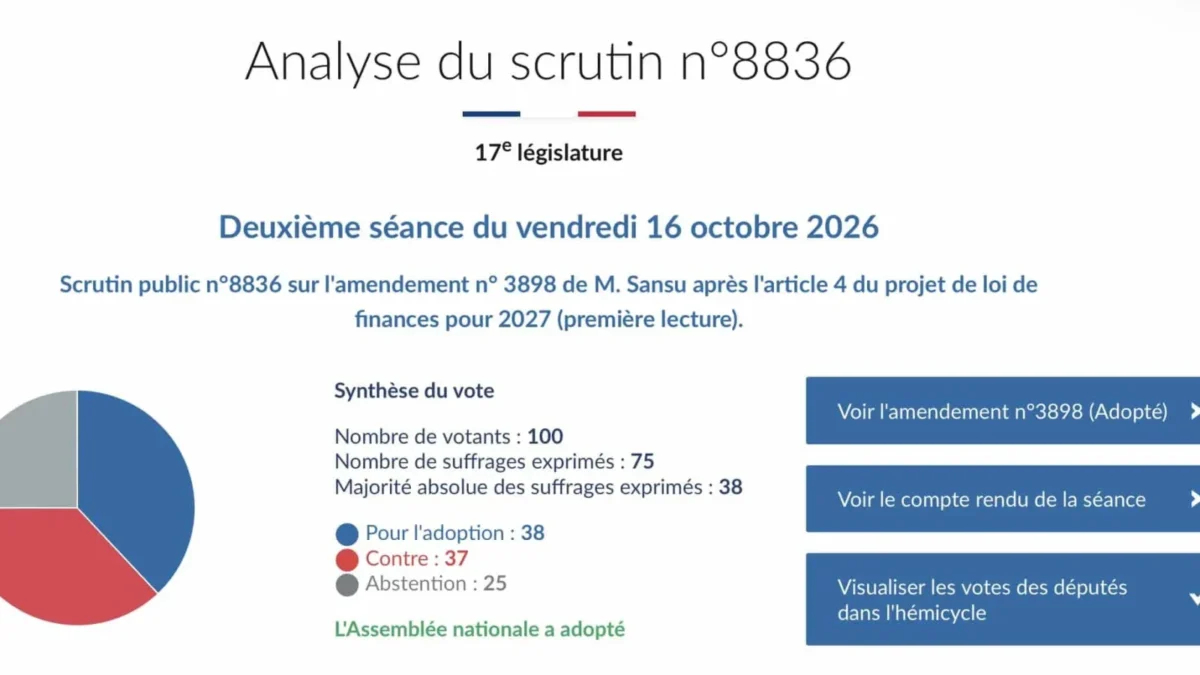
France’s National Assembly narrowly passed an amendment by a vote of 38 to 37 to tax capital gains when investors convert cryptocurrency into stablecoins, starting January 1, 2027. Proposed by communist deputy Nicolas Sansu, the measure aims to close a perceived loophole. Out of 577 deputies, only 100 participated in the vote, and one of the 38 “yes” voters later stated she intended to vote no.
Official records from the Assembly confirm that deputy Olivia Grégoire corrected her ballot following the tally, though the adjustment does not alter the outcome. This leaves open the questions of who backed the France crypto tax and whether it will ultimately remain in effect.
JUST IN:
France's parliament advances legislation to impose 31.4% capital gains tax on crypto-to-stablecoin transactions.
— Watcher.Guru (@WatcherGuru) October 20, 2026
Discover: Best Meme Coin ICOs to Invest in 2026
New Stablecoin Rule: What Does the France Crypto Tax Change?
While the proposal was formally submitted by the small Democratic and Republican Left group, the concept actually originated from within the crypto sector. In a May opinion piece published by Le Monde, three French startup founders—representing Deblock, Waltio, and Lyzi—advocated for this specific tax, estimating that between €1 billion and €3 billion in gains are parked in stablecoins annually.
On the legislative floor, the measure was supported by the left (France Insoumise, the Socialists, the Greens, and Sansu’s group) alongside four centrist deputies. President Macron’s allies and right-wing lawmakers opposed it. The far-right National Rally decided the outcome by abstaining, with 25 of its members sitting out the vote and only 10 voting against.
The new regulation eliminates the existing tax deferral on crypto-to-stablecoin swaps. Currently, trading bitcoin for USDC incurs no immediate tax, as levies are only triggered upon cashing out into euros or spending the assets. Under Amendment I-3898, converting crypto into an e-money token—defined as a single-currency pegged stablecoin under the European Union’s MiCA framework—would be subject to France’s 31.4% flat tax rate.
As an example, converting bitcoin purchased at €30,000 into USDC at a value of €100,000 would result in a €21,980 tax bill, even though no euros were ever withdrawn to a bank account.

Additionally, the text eliminates France’s portfolio-wide cost calculation method. Instead, individual gains would be computed based on the specific acquisition cost of the assets sold, utilizing a weighted average for tokens purchased at varying prices.
EXPLORE: European Central Bank President Confirm Digital Euro Plans
French Government Targets Stablecoin Gains. How Are Crypto Traders Reacting?
The reaction from traders and industry advocates has been strongly negative. Because stablecoins are commonly used by French traders to store profits between trades, the French crypto industry association Adan opposed the tax, cautioning that it would drive users away from regulated euro-denominated tokens and toward dollar-backed alternatives.
Francois Volpoet, Chainalysis’ sales director for France, noted that the policy could incentivize investors to shift toward decentralized finance (DeFi), peer-to-peer transactions, and offshore platforms. The tax primarily impacts stablecoins officially licensed within Europe, which are the simplest to track.
The introduction of this tax coincides with a broader legislative battle over the 2027 budget amid a divided parliament lacking a clear majority. Prime Minister Sébastien Lecornu is targeting €54 billion in savings to lower the national deficit from 5.4% to 5% of GDP. Public Accounts Minister David Amiel urged Sansu to pull the amendment, arguing that France must “first define stablecoins.”
No political party has secured a parliamentary majority since the snap elections in 2024. While Lecornu previously bypassed a vote on the 2026 budget using Article 49.3—a constitutional mechanism that avoids a floor vote—he has pledged not to use it this time. With 2,828 amendments still under review, the vote on the budgetary tax measures has been pushed back to November 3.
Following the lower house, the legislation will move to the Senate, where a right-leaning majority could potentially remove the provision. Meanwhile, the upcoming presidential race next spring looms over every parliamentary vote.
DISCOVER: 15+ Upcoming Coinbase Listings to Watch in 2026
Follow 99Bitcoins on X For the Latest Market Updates and Subscribe on YouTube For Daily Expert Market Analysis.
Frequently Asked Questions
4 questions01When will the France crypto tax on stablecoin swaps take effect?
If enacted into law, the tax is scheduled to begin on January 1, 2027.
02What is the tax rate applied to crypto-to-stablecoin swaps under the amendment?
The amendment applies France’s 31.4% flat tax rate to swaps into MiCA-compliant single-currency stablecoins.
03Who originally proposed the stablecoin tax?
While communist deputy Nicolas Sansu introduced the amendment in the National Assembly, the initial idea was requested by three French crypto founders (from Deblock, Waltio, and Lyzi) in a May op-ed published in Le Monde.
04How are industry groups reacting to the proposed tax?
Industry bodies like Adan have opposed the measure, warning that it will push French traders away from regulated European stablecoins and toward offshore platforms, DeFi, and peer-to-peer transactions.
Related stories

Deepseek AI Predicts That Chainlink (LINK) is About to do Something Huge
Deepseek AI outlines an ambitious and improbable scenario where Chainlink becomes the mandatory compliance layer for global CBDCs,…

XRP Traders Cut Binance Leverage by a Quarter in Under a Month, and the Ones Left Are Leaning Long
XRP traders on Binance have cut their leverage by 26.2% following a recent liquidation wave, while remaining market…

Meta AI Predicts Wild PI Network Binance Price for 2027
Meta AI forecasts a significant price increase for Pi Network by January 2027, projecting a target between $5…
JPMD Reaches Base for Institutional On-Chain Cash
JPMorgan is expanding its tokenized dollar deposit, JPM Coin, from Base to the Ethereum mainnet, providing approved institutional…