
China Wants $5.1B in Bitcoin, Now HSBC Is Launching RedCoin in Hong Kong
China moves to seize 61,896 Bitcoin valued at $5.1 billion from a fraud case, while HSBC launches its Hong Kong dollar-linked stablecoin, RedCoin, through PayMe for millions of users.
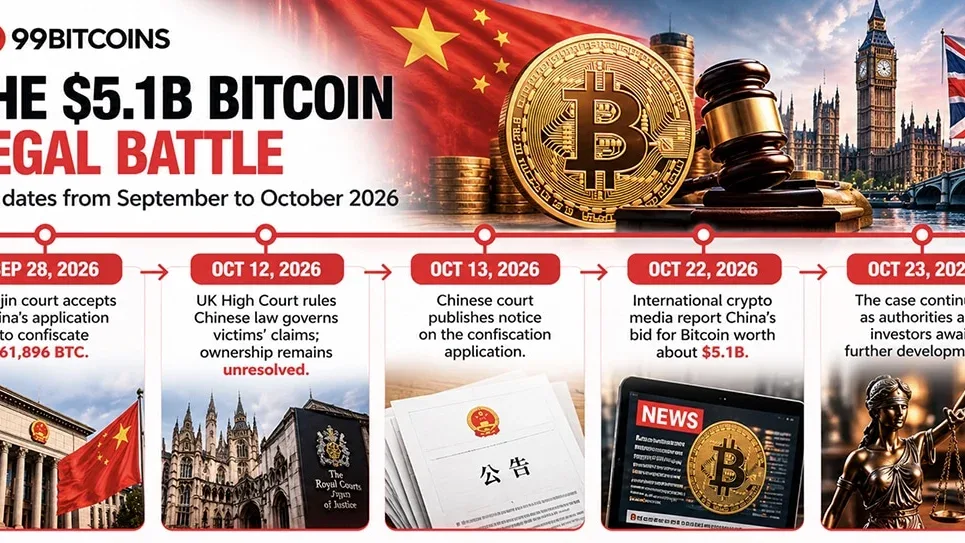
China is moving to seize 61,896 Bitcoin valued at $5.1 billion, even as HSBC begins introducing its Hong Kong dollar-linked stablecoin, RedCoin.
Chinese prosecutors have filed an application to confiscate cryptocurrency that UK authorities previously seized during a massive investment fraud probe. Just a day later, on October 23, HSBC launched RedCoin via its PayMe payment application in Hong Kong, giving over 3.3 million individuals potential access to the digital asset.
This timing sparks a compelling inquiry: as state authorities chase contested crypto assets, are traditional banking institutions working to integrate digital currency into a heavily regulated financial framework?
China Seeks Control of 61,896 Bitcoin
The confiscation request involves Bitcoin tied to Zhimin Qian, the mastermind behind a fraudulent investment scheme operating in China between 2014 and 2017. Prosecutors state that the operation pulled in more than 40 billion yuan via fraudulent products, causing over 102,000 investors to suffer losses.
UK officials secured the digital currency during their inquiry. Following a guilty plea for acquiring and holding criminal property, Qian received an 11-year and eight-month prison sentence in the UK in November 2025.
This recent legal filing represents another phase in the ongoing battle over who ultimately gains possession of the funds.
On September 28, the Tianjin No. 2 Intermediate People’s Court accepted the confiscation request. The court issued a public notice on October 13, shortly after the UK High Court ruled on October 12 that Chinese legislation should govern the claims made by victims to the Bitcoin. International crypto outlets reported on the Chinese seizure attempt on October 22.
Ownership of the coins was not finalized by the UK court decision. Investors must still prove their entitlements in accordance with Chinese law, and legal counsel representing the claimants have reportedly launched an appeal.
However, the filing does not mean China has successfully taken hold of the coins. The immediate action is simply a legal claim over digital funds currently secured by UK authorities. Valued at roughly $82,000 per coin, the total of 61,896 BTC comes out to approximately $5.1 billion.
Discover: Best Meme Coin ICOs to Invest in 2026
HSBC RedCoin Goes Live in Hong Kong
While the Bitcoin controversy winds through the judicial system, HSBC is rolling out a distinct form of digital currency. The bank initiated the deployment of HSBC RedCoin through its Hong Kong payment service, PayMe. According to HSBC, the stablecoin aims to sustain a one-to-one redemption rate with the Hong Kong dollar and relies on backing from segregated, liquid holdings.
HSBC Launches HKD-Backed RedCoin Stablecoin for 3.3 Million PayMe Users in Hong Kong
According to the South China Morning Post, HSBC is rolling out its Hong Kong dollar-backed stablecoin, RedCoin, to more than 3.3 million PayMe users starting October 23. The initial phase… pic.twitter.com/dKitKCfD8Y
— Wu Blockchain (@WuBlockchain) October 23, 2026
Peer-to-peer transfers and merchant checkouts mark the focus of the initial rollout. With a user base exceeding 3.3 million, PayMe and the bank intend to integrate stablecoin wallet features into the Hong Kong mobile banking application later in the year.
Issuance of HSBC RedCoin takes place under a permit provided by the Hong Kong Monetary Authority. Furthermore, the bank has shared intentions to expand the token into institutional and corporate arenas, including tokenized investment vehicles.
This rollout aligns with Hong Kong’s broader push to build a compliant digital-asset marketplace. Although it acts as a Special Administrative Region of China, Hong Kong retains a separate legal and financial structure backed by the “one country, two systems” principle.
As a result, observers should not view the launch as a sign that mainland China is softening its stance on cryptocurrency restrictions. HSBC RedCoin functions under Hong Kong regulatory oversight as a Hong Kong dollar-linked stablecoin rather than a mainland Chinese yuan stablecoin.
Bitcoin, HSBC RedCoin, and Digital Money
The differences between Bitcoin and HSBC RedCoin put a spotlight on two major questions confronting the digital-asset sector: asset control and practical utility.
While Bitcoin functions across a decentralized network, national courts, law enforcement, and rival victim claims can still complicate cases involving stolen or confiscated balances. The move by Chinese authorities illustrates the hurdles of determining ownership when digital assets tied to alleged criminal acts cross international borders.
A more traditional path is taken by HSBC RedCoin. Its worth connects directly to a fiat currency, a licensed banking entity issues it, and its early applications focus on payments routed through standard banking infrastructure.
DISCOVER: 15+ Upcoming Coinbase Listings to Watch in 2026
Follow 99Bitcoins on X For the Latest Market Updates, and Subscribe on YouTube For Daily Expert Market Analysis.
Frequently Asked Questions
4 questions01Why is China trying to confiscate 61,896 Bitcoin?
Chinese prosecutors applied to seize the Bitcoin—linked to a fraudulent investment operation run by Zhimin Qian between 2014 and 2017—which allegedly defrauded more than 102,000 investors out of over 40 billion yuan.
02Who currently holds the disputed Bitcoin?
UK authorities seized the cryptocurrency during their investigation, and Qian was subsequently sentenced to prison in the UK in November 2025.
03What is HSBC RedCoin?
HSBC RedCoin is a Hong Kong dollar-backed stablecoin rolled out through HSBC’s PayMe app in Hong Kong, designed to maintain a one-to-one redemption value backed by segregated, liquid assets.
04Is mainland China relaxing its cryptocurrency restrictions due to the HSBC RedCoin launch?
No. HSBC RedCoin operates under Hong Kong’s distinct regulatory framework and legal system as a Hong Kong dollar stablecoin, not as a mainland Chinese yuan stablecoin.
Related stories

Retail Traders Have Left Bitcoin Futures: Can BTC USD Sweep $80,000 and Bounce?
Bitcoin hovers near $81,700 as retail traders exit futures markets. With U.S. spot Bitcoin ETFs drawing $1 billion…

Bitcoin Price Today: US Money Supply Hits $23.3Tn – Why is BTC USD Falling Below $82,000?
Bitcoin price fell back below $82,000 as renewed selling pressure threatened the $80,000 support level, with analysts pointing…
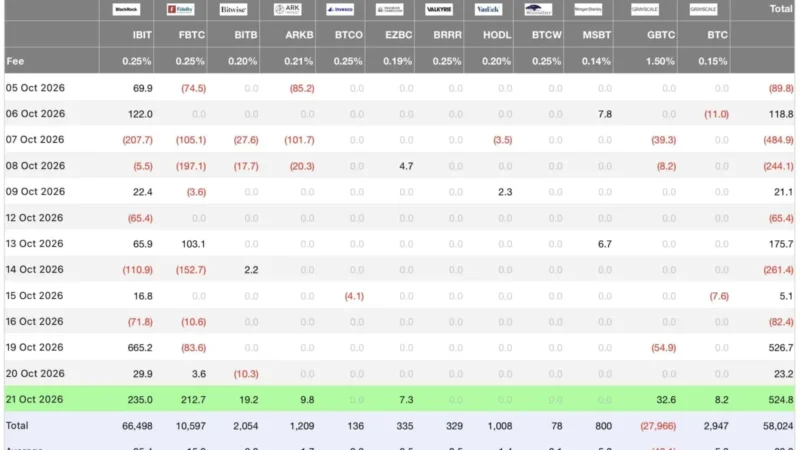
Bitcoin ETFs Turn October Positive With $1 Billion in Three Days While ETH Funds Bleed $1 Billion
U.S. spot Bitcoin ETFs turned October positive with over $1 billion in inflows over three days, while Ethereum…

J.P. Morgan Projects 10% a Year for Bitcoin: The Bank’s Own Bear Case Points to $25,000
J.P. Morgan Asset Management projected an annual return of 10 percent for Bitcoin over the next decade in…