
Clearpool’s 97% Vote Brings Credit to XRPL, Not Ripple XRP Demand
Clearpool holders overwhelmingly approved a 97% vote to expand to the XRP Ledger and migrate CPOOL to the CLEAR token. However, the institutional credit product uses RLUSD stablecoin for loans, offering limited direct demand for XRP.
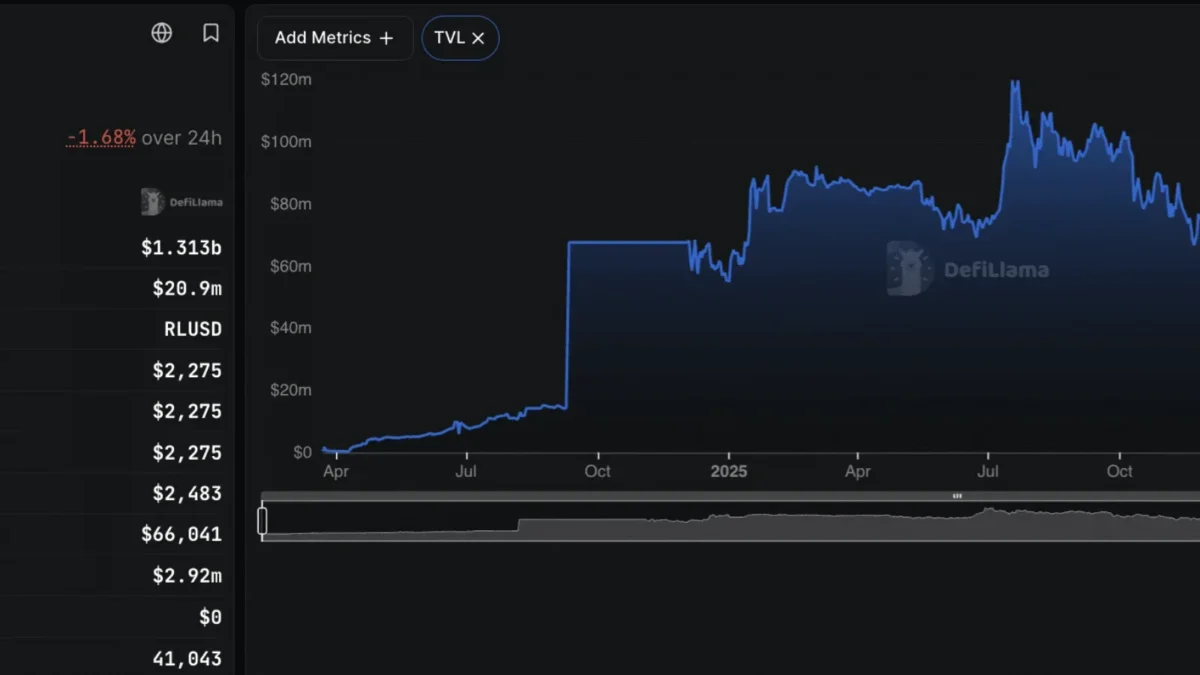
Clearpool holders approved an expansion to the XRP Ripple Ledger with 97% support, backing a one-for-one conversion from CPOOL to the new CLEAR token.
But the institutional credit product tied to the move lends and repays in RLUSD, not XRP-a distinction that could lift activity on the ledger without creating much direct demand for XRP.
Governance vote passed
The Clearpool community has approved expansion to the XRP Ledger and the 1:1 migration of CPOOL → CLEAR with 97.16% in favor.
Migration is targeted for Q4. More details on next steps to come
pic.twitter.com/fyb7hcg5eB
— Clearpool (@ClearpoolFin) October 5, 2026

According to multiple reports, the migration was reported on October 5, 2026, with the transition expected in the fourth quarter. XRP was about $1.51 that day, up 0.8% over 24 hours and 1.9% over seven days.
Clearpool is adding credit infrastructure to XRPL, but the announced product’s dollar-based settlement does not require borrowers to use XRP Ripple tokens, a caveat that investors should be taking note of.
What Changes in the CPOOL-to-CLEAR Migration?
CPOOL, Clearpool’s token, will convert to CLEAR at a 1:1 ratio on the XRP Ledger, with an initial circulation of 1.1 billion CLEAR tokens. The token migration changes how transactions are recorded but does not affect Clearpool’s borrowers or loan sizes, as the Ethereum marketplace will continue to operate alongside the XRPL expansion.
Clearpool partners with Ripple and Cicada Partners: Clearpool provides lending infrastructure, Cicada assesses borrowers, and Ripple is a limited partner without loss guarantees. Target borrowers include fintechs and payment processors seeking working capital. Since 2021, Clearpool has facilitated over $930M in loans, while Cicada has underwritten over $ 860M.
Loans are processed in RLUSD, a dollar-pegged stablecoin, with XRP used for network fees that are burned. Clearpool plans to allocate half of its protocol fees to buy back and burn CLEAR, benefiting CLEAR holders but not creating direct demand for XRP. The distinction between RLUSD usage and XRP demand is significant, as using a dollar stablecoin does not equate to needing XRP for loans.
CLEARPOOL EXPANDS TO XRPL
Clearpool’s community has approved its expansion to the XRP Ledger with 97.16% support, alongside the migration from CPOOL to CLEAR.
Another institutional credit project is moving toward XRPL.
The infrastructure keeps expanding. pic.twitter.com/Du2sXKTzyC
— John Squire (@TheCryptoSquire) October 6, 2026
EXCLUSIVE: Earn $50 With EdgeX and Enter $300K Prize Draw
More Ledger Utility Does Not Automatically Mean More XRP Ripple Demand
Clearpool’s governance forum describes the XRPL initiative as part of a broader move toward institutional credit, with the lending infrastructure still subject to technical rollout. Its proposal says the product was being tested on XRPL Devnet and that the XLS-65 Single Asset Vaults and XLS-66 Lending Protocol were in the amendment process. Those details make execution-not just the vote-an important part of the story.
For the XRP price case, the primary article’s October 5 snapshot provides difficult context: XRP was down 50% over the prior year and about 59% below its reported $3.65 all-time high from July 2025. It put XRP’s market capitalization near $95 billion, with approximately 63.1 billion tokens circulating against a maximum supply of 100 billion.
A project migration alone is a small demand signal for an asset of that scale. The primary article also notes that Ripple continues to release XRP from escrow reserves over time, another supply factor investors may weigh alongside any new demand.
XRPL activity and XRP demand are related, but they are not interchangeable. The use of RLUSD across Ethereum and the XRP Ledger helps illustrate why a stablecoin can support ledger activity without making XRP the principal asset in a transaction.
(SOURCE: DefiLlama)
Discover 800+ Trading Pairs You Can Trust With Kraken
What Would Make the XRP Catalyst Stronger?
Bull case: Future Clearpool or Ripple products could use XRP as collateral, require XRP liquidity, or connect currencies through XRP. Those uses would create a more direct link between credit activity and demand for the token, but the current RLUSD-denominated product doesn’t establish them.
Base case: The migration brings a credit platform and more RLUSD activity to XRPL, while XRP’s role remains mainly transaction fees. In that scenario, the ledger gains utility but the price effect stays limited.
Bear case: Loans remain in RLUSD and protocol-fee buybacks support CLEAR, leaving little incremental reason for borrowers or lenders to hold XRP. That would reinforce the distinction between network growth and token demand highlighted by XRP Ledger activity and demand for XRP.
The 97% vote is meaningful evidence that Clearpool intends to expand institutional credit on XRPL. It is not, on its own, evidence of a strong XRP-price catalyst: the announced loans use RLUSD, while the planned fee buybacks target CLEAR.
Frequently Asked Questions
4 questions01What was the result of the Clearpool governance vote?
Clearpool holders approved an expansion to the XRP Ledger with 97.16% support, which includes a one-for-one token migration from CPOOL to CLEAR.
02Does the new Clearpool integration create direct demand for XRP?
Not significantly. While the credit infrastructure operates on the XRP Ledger and utilizes XRP for network fees that are burned, loans and repayments are handled in the RLUSD stablecoin, and protocol-fee buybacks benefit the CLEAR token.
03What token replaces CPOOL on the XRP Ledger?
CPOOL tokens will be converted to the new CLEAR token at a 1:1 ratio, with an initial circulation of 1.1 billion CLEAR tokens targeted for a Q4 transition.
04Who are Clearpool’s partners in this initiative?
Clearpool partners with Cicada Partners—who assess and underwrite borrowers—and Ripple, which acts as a limited partner without loss guarantees.
Related stories
A Decade-Old Ripple XRP Ledger Flaw Was Patched Before Disclosure
An XRP Ledger vulnerability could have created extra spendable XRP, but Ripple says it was patched before disclosure…
AI Crypto Tokens Take South Korea by Storm, Overtaking Ripple XRP
Artificial intelligence cryptocurrencies have surged to become South Korea's top crypto sector by June 2026, overtaking payment assets…
Ethereum News: Glamsterdam Test Leaves Validator Strain Unresolved
Ethereum's Glamsterdam upgrade has elevated Sepolia's block-gas limit to nearly 200 million, though questions remain regarding validator strain…

Bitcoin Privacy Faces New Questions Over HMRC Crypto Powers
HM Revenue and Customs is considering expanded information-gathering powers over UK crypto businesses, sparking privacy concerns because linking…